Permanent Outdoor Lighting Installation Areas
Permanent outdoor lighting is installed along the main architectural lines and exterior areas that define a commercial property after dark, including rooflines, eaves, fascia, building edges, entrances, façades, walls, pathways, landscape areas, patios, courtyards, trees, canopies, fences, and property borders.
A strong installation creates layers instead of placing lights on every available surface. Roofline lighting establishes the building’s outline, architectural lighting emphasizes entrances and important surfaces, and landscape lighting carries the design into pathways, planting areas, trees, and other ground-level features. BlueHopper combines these different lighting applications within one permanent outdoor lighting ecosystem so the property can work as a coordinated exterior after dark.
Where Is Permanent Outdoor Lighting Installed Along Commercial Rooflines?
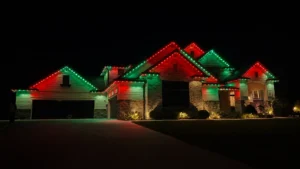
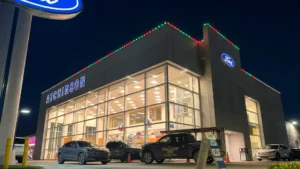
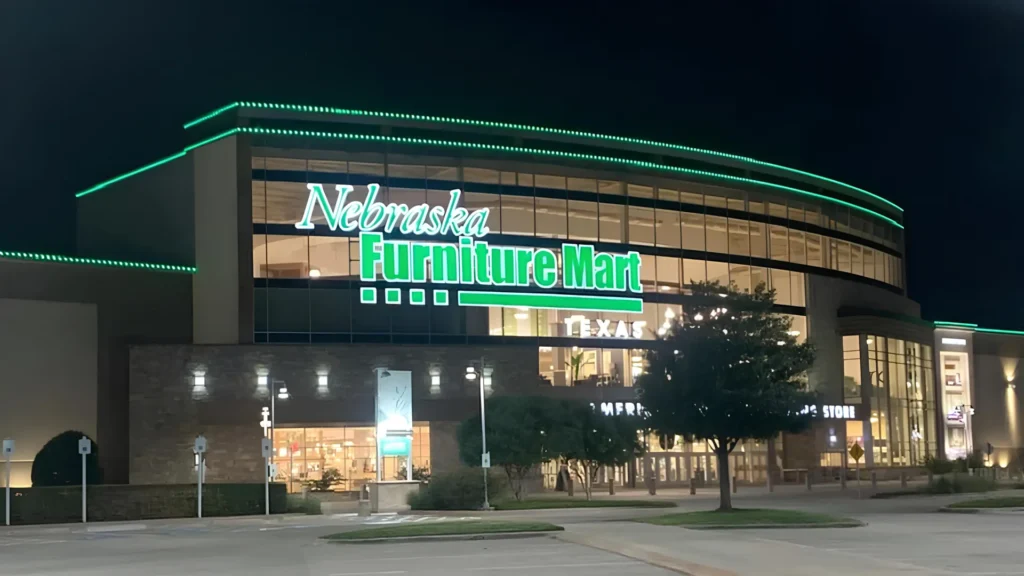
Permanent outdoor lighting is commonly installed along rooflines, eaves, fascia, building edges, awnings, and canopy lines because these features establish the basic architectural shape of a commercial building. Following the most important edges makes the building’s width, height, corners, roof changes, and overall proportions easier to recognize after dark.
Not every architectural line needs equal emphasis. A cleaner installation usually concentrates lighting on the edges that contribute most to the identity of the building while allowing secondary lines to remain quieter.
For low-profile roofline installations, BlueHopper’s Ridge uses a 35 mm RGBW puck and can support runs of 400 lights on 24V without power injection. Its two-part track also allows an individual light to be serviced without dismantling the full run. BlueHopper Track-Lite is available in brown, black, gray, white, and beige, giving installers multiple options for blending the track with different exterior finishes.
Where Is Permanent Outdoor Lighting Installed Around Entrances, Façades, and Walls?
Permanent outdoor lighting can be installed around entrances, façades, walls, columns, soffits, and other architectural features that customers encounter as they approach the building. These areas bring the lighting composition down from the roofline and help important parts of the property remain visually connected after dark.
Entrances can receive stronger emphasis because they identify where customers should arrive, while façade and wall lighting can reveal selected materials, recesses, columns, signage areas, or structural details. Brick, stone, glass, and cladding respond differently to light, so the entire surface does not need the same intensity or type of illumination.
BlueHopper architectural accent fixtures can also operate with the roofline system. The 8W Apex, for example, can work on the same controller and line as Ridge and Spectra, allowing soffit and architectural accent lighting to extend the roofline design without requiring a completely separate system.
Where Is Permanent Outdoor Lighting Installed Along Pathways and Landscape Areas?
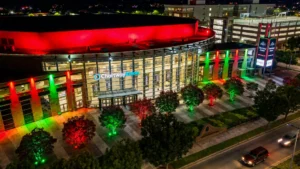
Permanent outdoor lighting is installed along pathways, entrance gardens, planting beds, trees, driveway approaches, and other landscape areas that connect the surrounding property with the building. These lower lighting layers prevent the property from becoming a brightly outlined building surrounded by darkness.
Pathway lighting can define movement toward entrances, while landscape lighting can emphasize selected trees, planting areas, walls, and other exterior features. BlueHopper supports these different conditions with fixtures such as MR16 lamps, PAR36 lamps, G4 Bipin lamps, flood lights, and wall washers.
Landscape lighting can also remain part of the same programmable environment as the architectural lighting. BlueHopper’s MR16 RGBW smart lamp, for example, supports 16 million color combinations along with hundreds of light shows, scenes, and presets.
Where Is Permanent Outdoor Lighting Installed Around Patios, Courtyards, and Outdoor Dining Areas?
Permanent outdoor lighting can be integrated around patios, courtyards, outdoor dining areas, pergolas, canopy structures, and other commercial spaces where customers spend time outside.
These areas often need a different lighting character from the main building. A restaurant patio may require restrained lighting for normal service, while a hotel courtyard, beer garden, or event area may need a more expressive appearance at certain times. BlueHopper lighting can follow structural edges, overhead features, surrounding architecture, or nearby landscape elements so these spaces remain connected to the rest of the property.
The installation should respond to how the space is actually used rather than simply adding light to every beam or surface.
Where Is Permanent Outdoor Lighting Installed Around Trees and Canopy Areas?
Permanent outdoor lighting can be installed around selected trees and overhead canopy areas when those elements contribute to the depth, scale, or atmosphere of the commercial property.
Tree lighting creates another vertical layer away from the building, while canopy lighting can define courtyards, outdoor gathering spaces, dining environments, and event areas. These features generally work best as supporting elements rather than competing with the main roofline or entrance.
For large commercial properties, BlueHopper’s MeshTek-based lighting network can support more than 5,000 devices across deployments exceeding 10 million square feet, allowing architectural and landscape lighting to remain connected even when the installation extends well beyond the main building.
Where Is Permanent Outdoor Lighting Installed Along Fences and Property Borders?
Permanent outdoor lighting can be installed along commercial fences, perimeter structures, gates, rails, and selected property borders when those elements form an important part of the exterior.
Lighting these boundaries can define the edge of the property while connecting perimeter structures with nearby landscape areas, pathways, or the main building. BlueHopper’s fence lighting can use the same permanent lighting family as other exterior areas, allowing the perimeter to become another layer of the wider property lighting system rather than a separate visual concept.
The strongest commercial installation connects the property’s most important rooflines, entrances, architectural surfaces, pathways, landscape areas, gathering spaces, trees, and selected perimeter features. With BlueHopper, each area can perform a different role while still operating as part of one coordinated commercial exterior after dark.