Installing Permanent Lights Under Soffits
Permanent outdoor lighting is installed under soffits by mounting a low-profile track flush with the soffit or adjacent architectural surface, positioning the lights in a consistent run, concealing lighting and extension cables inside the track, and routing low-voltage power and data back to the controller. Under-soffit installation is especially useful around entrances, porches, covered walkways, and roof overhangs because the recessed position can provide clean downward illumination while keeping the permanent system discreet during daylight. BlueHopper uses professional installation, UV-protected track, a standard 24V DC supply, and routing components that allow the system to follow straight, curved, and irregular architectural surfaces.
How Is the Track Mounted Under a Soffit?
Permanent lighting track is mounted closely against the soffit so the lights and cabling follow the architecture instead of hanging below it like temporary string lights. The mounting line should remain visually consistent across connected sections while responding to corners, recesses, changes in roof direction, and other structural features.
BlueHopper’s roofline profile is less than an inch wide and is designed to fit flush beneath soffit overhangs. The low-profile installation keeps the lighting close to the building surface while still allowing it to illuminate entrances, porches, and covered areas below.
The exact mounting line depends on the soffit geometry and the direction in which the light needs to project. A shallow overhang may allow the lighting to follow one continuous line, while deeper or more complex soffits may require the placement to change around architectural recesses.
Where Should Permanent Lights Be Positioned Under a Soffit?
Permanent lights should be positioned under a soffit where they can create an even lighting effect without becoming visually intrusive when viewed during the day. The ideal position balances illumination below the overhang with a clean relationship to the fascia, wall, porch, or architectural feature being lit.
Placing the track too far inside a deep soffit can reduce how much of the lighting effect reaches the outer architecture. Positioning it unnecessarily close to the edge may create a more exposed appearance than the design requires.
The installation should therefore follow the purpose of the area. An entrance may benefit from more direct downward illumination, while a soffit above an architectural wall may be positioned to emphasize the surface beneath it.
What Type of Track Is Used for Under-Soffit Lighting?
BlueHopper Track-Lite uses a slim profile with UV-rated acrylic and a fire-retardant base, providing an architectural housing for both the lights and extension cables. The track is designed to conform to straight, curved, and irregular surfaces, allowing it to follow different soffit layouts without requiring every installation to be a simple straight run.
Track-Lite is available in brown, gray, white, and beige, giving the installer options for coordinating the permanent track with common soffit, fascia, and exterior finishes.
The track serves more than an aesthetic purpose. By housing the lighting and associated cabling inside one defined architectural run, it keeps the installation organized and helps avoid the exposed-wire appearance associated with temporary lighting.
How Are the Wires Hidden Under the Soffit?
Permanent outdoor-lighting wiring is concealed within the track and routed along the planned architectural path rather than being left exposed beneath the soffit. BlueHopper Track-Lite is specifically designed to house both the lighting and extension cables inside the same track system.
This allows the installation to move across connected soffit sections while maintaining a cleaner finished appearance.
Power and data routing are planned before the complete run is installed so cable extensions, direction changes, and power-insertion points can be incorporated where needed rather than added visibly after the lighting is already in place.
The result is a permanent system in which the lights, track, and cabling read as one architectural installation.
How Are Power and Data Routed Through an Under-Soffit Installation?
BlueHopper permanent roofline lighting uses a standard 24V DC supply, with professional installers planning power routing and signal extension according to the length and geometry of the lighting run.
Longer or more complex layouts can use jumpers to extend connections, 4-wire T-connectors to support power insertion and two-direction routing, and data extenders where the signal needs additional support.
These components allow the installation to continue through architectural transitions without requiring every soffit section to have its own independent lighting system.
Power planning is therefore part of the soffit design from the beginning. The visible track may appear simple, but the installer also has to account for the electrical path, data path, controller location, run length, and any points where the system changes direction or branches.
How Are Corners and Irregular Soffits Handled?
Permanent lighting can follow corners and irregular soffits by adapting the track and routing path to the actual architecture instead of forcing every section into a straight line. BlueHopper Track-Lite is designed to conform to straight, curved, and irregular surfaces, making it suitable for soffits with changing geometry.
A change in direction should still look intentional after dark. Fixture spacing, track alignment, and cable routing need to remain coordinated as the installation moves through corners or architectural transitions.
On a complex property, the goal is not to make every soffit section physically identical. It is to maintain a continuous visual relationship from one section to the next.
How Does Under-Soffit Lighting Work Around Entrances and Porches?
Under-soffit permanent lighting works particularly well around entrances and porches because the recessed position can illuminate the space beneath the overhang rather than only outline the roof from a distance. This makes it useful for front doors, covered porches, entry walls, and walkways where people regularly move after dark.
BlueHopper specifically uses its under-soffit system to deliver diffused lighting across entries, porches, and covered walkways.
The entrance can therefore receive its own lighting treatment while remaining connected to the broader roofline system. The roof edge may define the architecture above, while the soffit lighting provides illumination closer to the doorway and walking surface.
This creates depth around the entrance instead of relying on a single visible line of roof lights.
What About Deeply Recessed Soffits?
Deeply recessed soffits may require architectural accent lighting in addition to or instead of a standard roofline run. When the mounting position sits far inside an overhang, the lighting may function more as illumination for the recess than as part of the visible roof outline.
BlueHopper’s Apex is designed for architectural areas such as deeply recessed soffits, columns, and entryways. It can operate within the same lighting ecosystem as the other roofline fixtures while addressing surfaces that need a different form of illumination.
This allows a deep recess to be treated according to its architecture rather than forcing the primary roofline fixture into a location where it produces a weaker result.
Will Under-Soffit Permanent Lighting Be Visible During the Day?
A properly integrated under-soffit installation is designed to remain discreet during daylight because the track sits closely against the architectural surface and contains the lights and cabling within a defined profile.
BlueHopper’s roofline track is less than an inch wide, and Track-Lite offers multiple exterior colors so the installation can coordinate more closely with the soffit, fascia, or trim.
The recessed position of a soffit can provide an additional visual advantage because the lighting system is naturally less exposed than a fixture mounted prominently on an outward-facing surface.
Daytime appearance should still be considered during layout planning. Track alignment, finish selection, and the route through corners and transitions all influence how well the permanent installation blends with the property when it is turned off.
Is Under-Soffit Lighting the Same as Front-Facing Roofline Lighting?
Under-soffit lighting and front-facing roofline lighting use the same broader permanent-lighting concept but create different effects because the fixtures occupy different architectural positions.
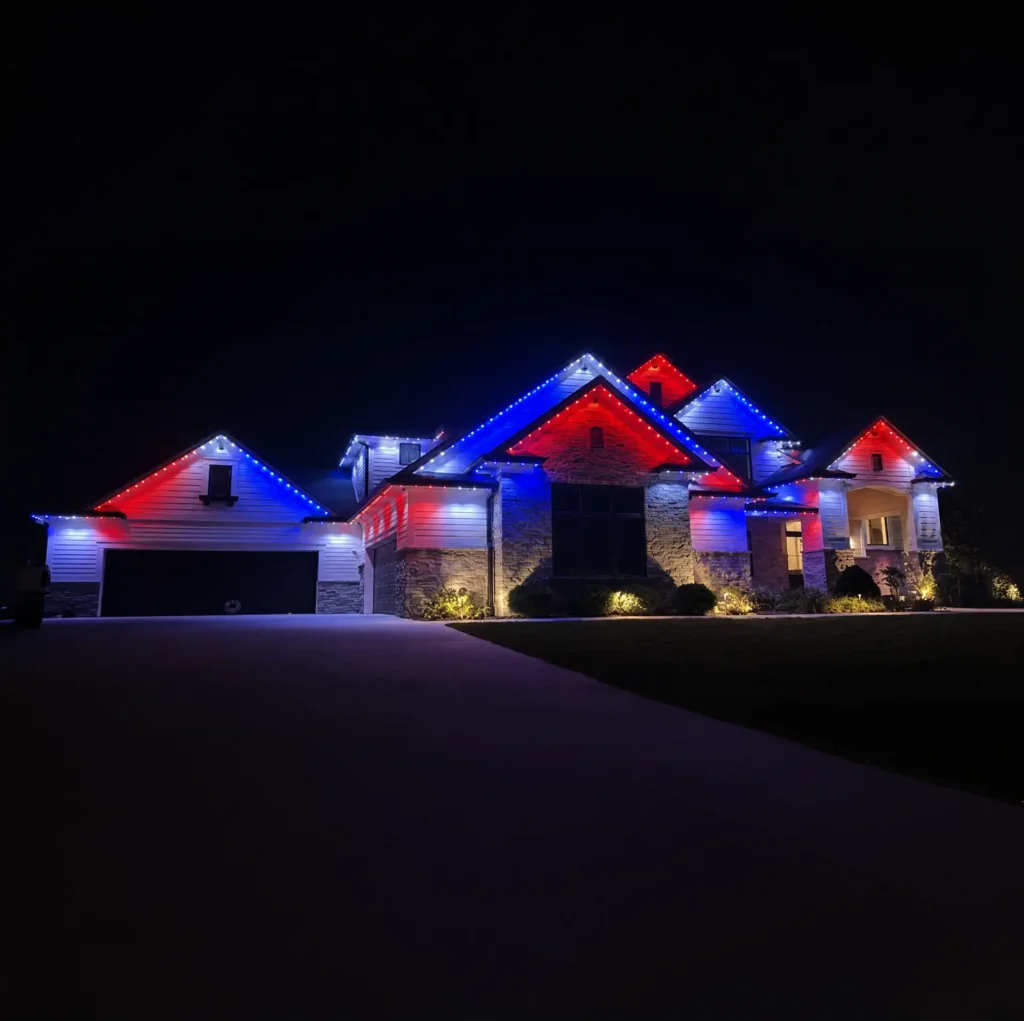
Front-facing lighting emphasizes the visible outline of the property. Under-soffit lighting directs more of its effect toward the walls, entrances, porches, and spaces below an overhang.
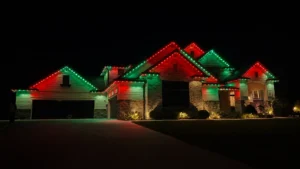
A single home can use both approaches. Front-facing lighting may trace a prominent gable or eave, while the soffit below it provides softer downward illumination.
The strongest installation chooses the mounting position according to what each architectural section needs to accomplish rather than applying one orientation across the entire property.
How Is the System Set Up After the Soffit Track Is Installed?
After the physical track, lighting, power, and signal routing are completed, the permanent-lighting system is commissioned so the installed sections can be controlled and organized correctly.
BlueHopper Certified Installers configure the controller, test the lighting runs, and group appropriate sections into lighting zones. Those zones can then be used with the BlueHopper control platform for colors, scenes, brightness, and schedules.
This step connects the physical installation with the smart-lighting system. A soffit section can operate as part of the main roofline or as its own controllable zone when the property layout or desired lighting behavior calls for it.
Who Should Install Permanent Lighting Under Soffits?
BlueHopper permanent outdoor lighting is professionally installed by Certified BlueHopper Contractors rather than sold as a standard consumer DIY roofline system. The installer plans the track selection, mounting path, power routing, signal extension, controller setup, and zone grouping for the individual property.
Under-soffit installation can appear simple once completed, but the finished track conceals a number of design decisions involving mounting position, electrical routing, signal continuity, corners, recesses, and architectural transitions.
Professional planning becomes especially important on multi-level houses, long soffit runs, deep recesses, complex roof geometry, or properties where front-facing and under-soffit lighting need to operate together.
What Makes an Under-Soffit Installation Work Well?
A successful under-soffit permanent-lighting installation keeps the system physically close to the architecture, produces an even lighting effect below the overhang, conceals lights and cabling inside the track, and maintains a consistent path through corners and architectural transitions.
The track position should respond to what the area needs to illuminate. Power and signal routing should be planned as part of the installation rather than added afterward, while the track finish and alignment should help the permanent system remain discreet during daylight.
With BlueHopper, the result is a low-profile permanent installation that can integrate soffits, entrances, porches, and covered walkways into the same smart roofline-lighting system without relying on temporary fixtures or exposed seasonal wiring.