I’ve been around outdoor lighting long enough to see the shift happen.
A few years back, most “outdoor lighting installers” were just electricians who used to install a few outdoor lights. Over the years, this has shifted towards design-driven, decorative, and programmable outdoor lighting systems.
Modern outdoor decorative lighting? It’s a different world now. And not everyone who says they do it actually does it well. From my experience, there are clear differences between someone who just installs light and someone who designs outdoor lighting as a craft.
Let me explain this.
It’s Not About Fixtures. It’s About Layers.
One of the biggest differences I see is mindset.
A traditional installer thinks in terms of fixtures.
“How many lights?”
“What wattage?”
“Where’s the power coming from?”
A modern decorative lighting professional thinks in a different way. He thinks about Shadow, Contrast,Texture etc. He looks at a house and asks: where should the eye go first? What deserves attention? What should stay subtle?
Sometimes less light is more powerful. That’s hard for many people to accept. Homeowners often think brighter equals better. At BlueHopper we don’t believe that too many lights will enhance illumination. Instead our patented Hyperlux technology will ensure that installers have to install less lights and still get maximum output in terms of brightness across all colors.
Good lighting has depth. It feels intentional and that modern decorative lighting professionals understand very well. And honestly, you don’t learn that from wiring manuals.
And then technology came in and changed the whole game
This is actually where the gap gets wider.
LED technology, smart controls, RGBW systems, it’s like the whole game got flipped suddenly and honestly not everyone has kept up. Some people are still installing the same old path lights & temporary lights and calling it a day. I’ve seen it. Frankly, it hurts a little to watch.
Modern outdoor lighting pros understand color temperature deeply. For example, not just “warm” and “cool.” I am talking 2700K vs 3000K. That slight shift changes everything. At Bluehopper, we use higher-output PAR36 bulbs (14W per color with consistent brightness).
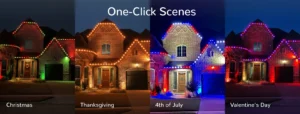
And then there’s control systems. Clients don’t want a boring on/off switch anymore. They want to set scenes, Holiday colors to be displayed as per theme, Soft everyday ambiance, and security mode. All controlled via their phone. Or, if they’re feeling fancy, just talk to the lights and it happens. That’s real magic.
Here’s the catch — making it feel effortless for the client isn’t easy. I’ve walked onto projects where someone installed great fixtures, but the control system was a total mess and not user-friendly. Too many apps, no proper service support, and that has left homeowners frustrated. Whereas BlueHopper’s biggest differentiators (via MeshTek’s architecture) is:
- BLE mesh networking
- Self-healing communication
- No single point of failure
- Reliable connectivity across large installations
- Offers less wiring& Faster installation with fewer fixtures
That’s when I realized: if the client doesn’t actually understand or enjoy using the system, your work isn’t done. Comfort, usability, and yes, a little wow factor — that’s what makes it professional. If the client doesn’t know how to use it comfortably, your job isn’t finished yet.
Smart, Effortless Lighting with BlueHopper
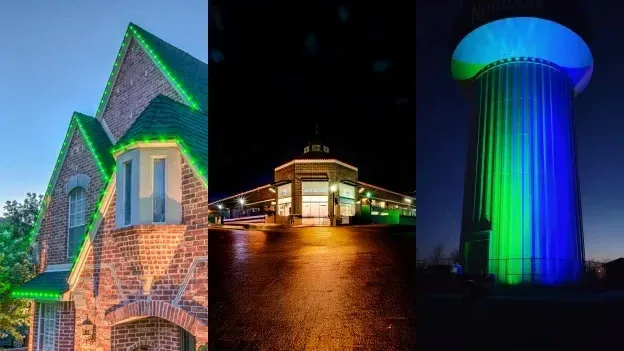
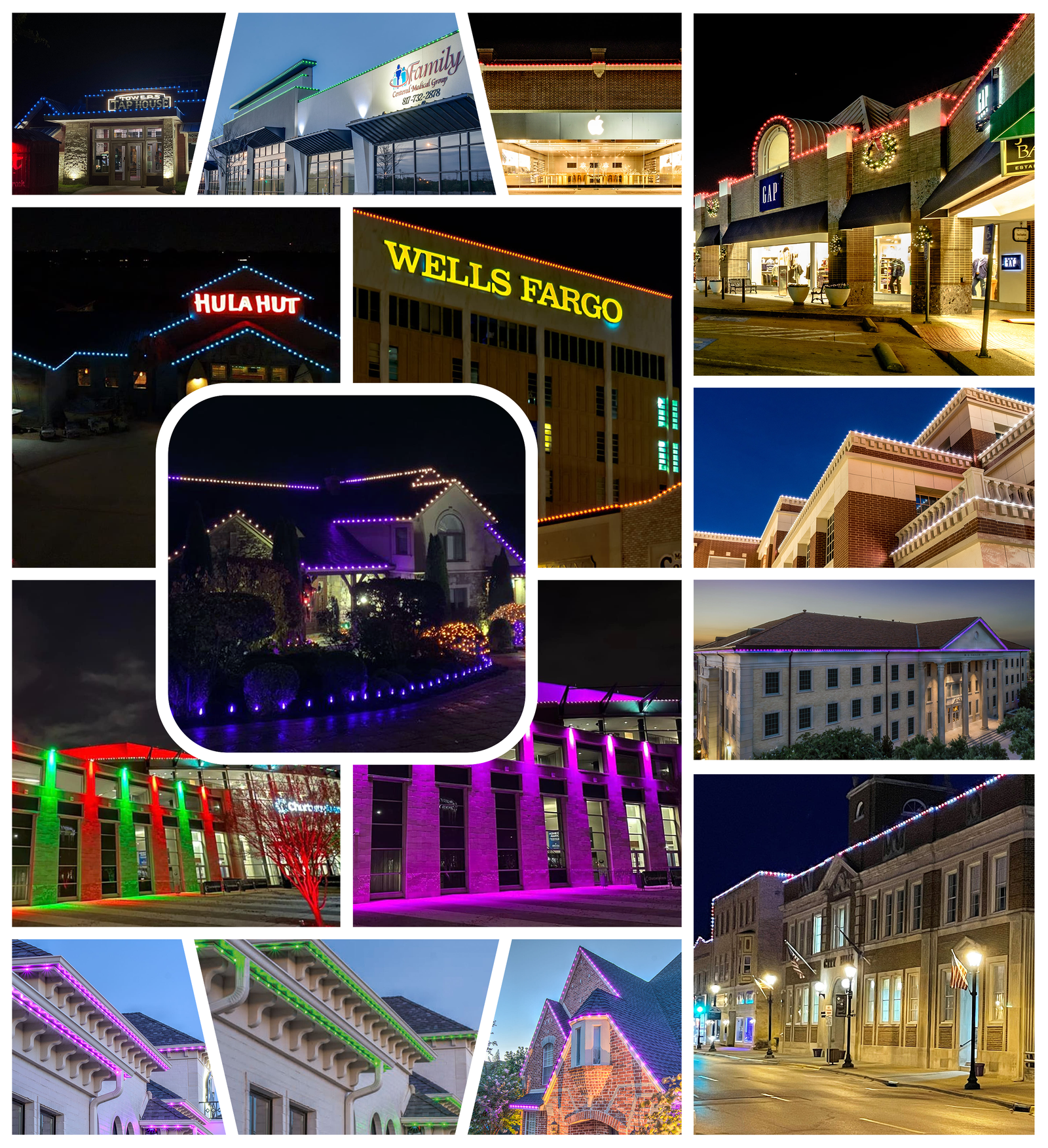
At Bluehopper, we’re not just sticking lights on a house and walking away. We’re talking about permanent outdoor lighting — like actual year-round, built-in-into-the-structure lighting that you don’t take down and put up every season. Bluehopper works for Restaurants, Car Dealerships, Retail Storefront, hospitality, and Municipal.
At Bluehooper, we provide Installer Training, Ongoing technical & marketing support, certified installer positioning, & a year round business with commercial recurring contracts & high-ticket jobs.
You control the whole thing from an app called BlueRoots™, and yeah, you can literally “talk to your lights” through voice commands, or just tap a remote button and apply a full lighting scene instantly with their one-click scene feature. It’s not gimmicky; it’s oddly satisfying when you step back and hit one button and the whole facade shifts mood for an event or season — no ladder, no hassle.
It’s More Than Electricity — It’s Architecture
This is something I’ve come to appreciate more over time.
You have to understand architecture first before placing the lights.
Uplighting a column isn’t just placing a light at the base. You consider beam angle. Setback distance. How the light fades before it hits the roofline. Whether it reveals texture or flattens it.
Stone behaves differently than stucco. Brick absorbs light. Smooth surfaces reflect.
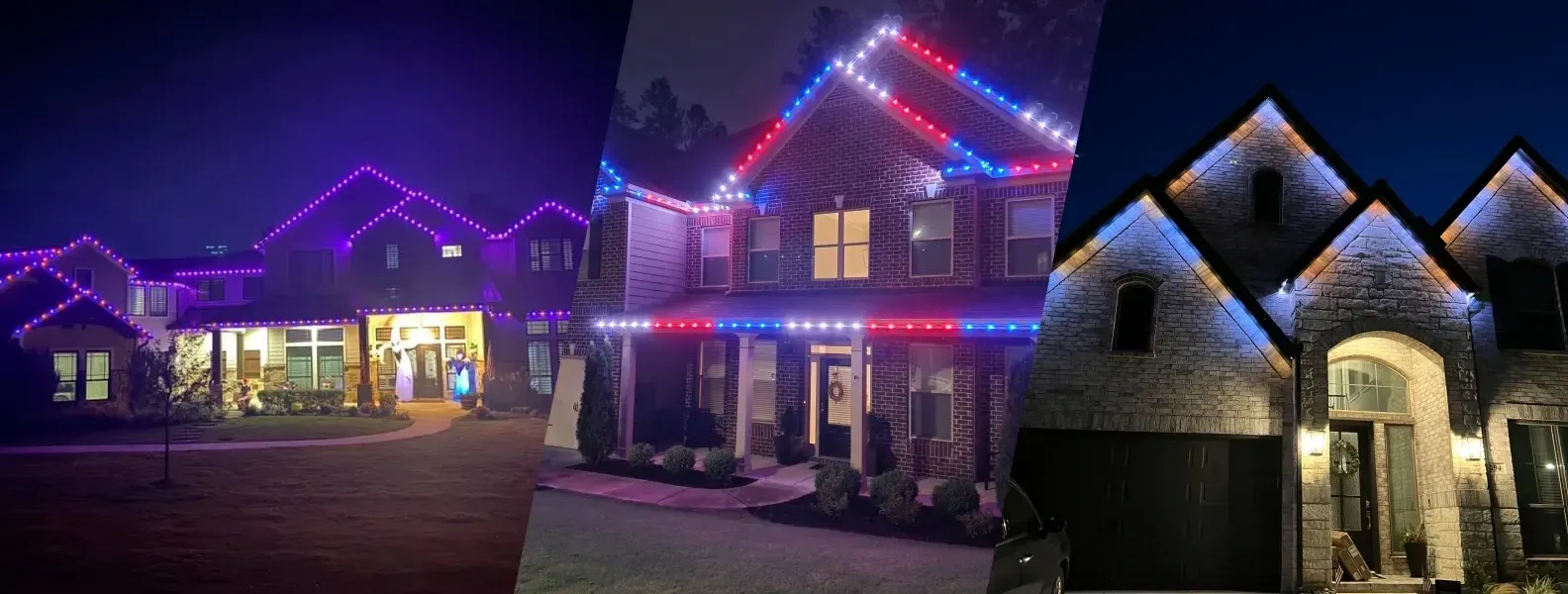
Permanent roofline lighting plays a role too. It isn’t about outlining a house with brightness. It’s about integration. Fixture spacing, lens diffusion, color temperature, and concealment all matters. The goal is to make the architecture glow with intention — not to see the diodes, but to feel the form.
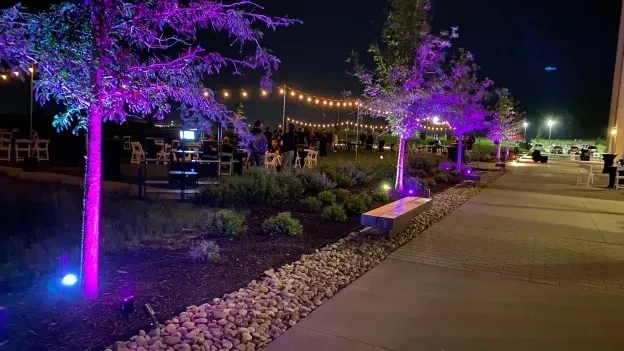
Landscape also follows the same philosophy. Trees aren’t just “objects to light.” They’re living forms. Wind changes how shadows move. Leaves shift the beam pattern. I’ve learned to respect that. You don’t overpower nature. You work with it.
That mindset doesn’t usually exist in general electrical work. It develops when you care about visual outcome, not just installation.
The Best Pros Hide the Hardware
Here’s a small detail that says a lot: during the day, you shouldn’t notice most of the fixtures.
Modern decorative lighting pros obsess over concealment. We trench carefully. We think about service access. We mount controllers, transformers, brass fixtures, and lighting connectivity components in discreet locations with clean wiring paths.
It takes more time. It’s not flashy work. But it matters. I’ve revisited older projects years later and felt proud because you still couldn’t see” the system during daylight. That’s a quiet win.
Weather Matters More Than People Think
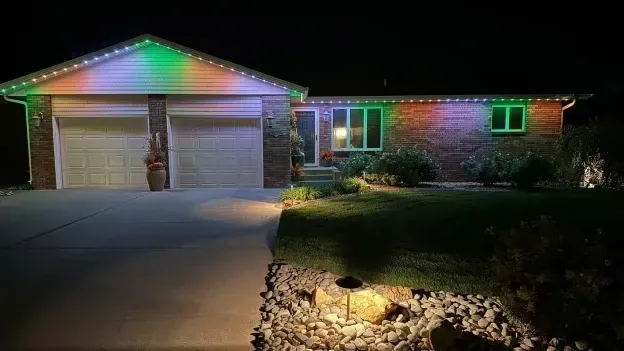
See Outdoor means outdoor.
Heat, rain, freezing temperatures, irrigation systems — all of it attacks your installation over a period of time. Cheap fixtures fail. Poor connections corrode. Improper drainage floods housings.
Modern pros choose materials carefully. Solid brass, Powder-coated aluminum, Proper IP ratings. Not because it sounds fancy. Because we’ve seen what fails. Waterproof connections done correctly and not just twisted wires in a plastic cap.
And voltage drop planning? It’s huge. A system that looks perfect on install day but dims unevenly six months later wasn’t designed well. I’ve gone back to jobs years later and seen fixtures half buried because no one planned for soil shift. That stays with you.
Experience teaches you to think five years ahead, not five days.
We Educate Clients (Even When They Don’t Ask)
This might honestly be the biggest difference.
A real lighting professional explains things. He doesn’t just install& disappear. He explains why we chose 2700K instead of 3000K. Why does that tree only need two fixtures instead of four? Why dimming the systems lightly can actually improve longevity of LEDs.
We set expectations.
Lighting changes how a property feels. It can increase perceived value. It can also look terrible if overdone. Clients rely on us to guide them. Education isn’t a sales tactic. It’s a responsibility.
It’s Ongoing, Not One time
Here’s something I didn’t fully understand early in my career that outdoor lighting systems evolve.
Permanent roofline lighting shouldn’t be treated like a seasonal add-on. You plan access points. Conceal wiring paths. Account for control systems and future programming updates. Leave room for additional runs or architectural changes. When integrated correctly, it becomes part of the home’s infrastructure — adaptable, serviceable, and ready to evolve right along with the property.
Landscapes grow. Trees fill out. New architectural features get added. Clients want upgrades later. Modern pros document wiring paths, Leave capacity in transformers, keep room for expansion plan, & Offer maintenance programs.
Because this system isn’t static. When you design with foresight, upgrades are easy. When you don’t, it becomes complicated & a headache for the installer.
Planning for the future is subtle. No one notices on install day but it definitely separates long-term professionals from short-term installers.
The Intangible Difference
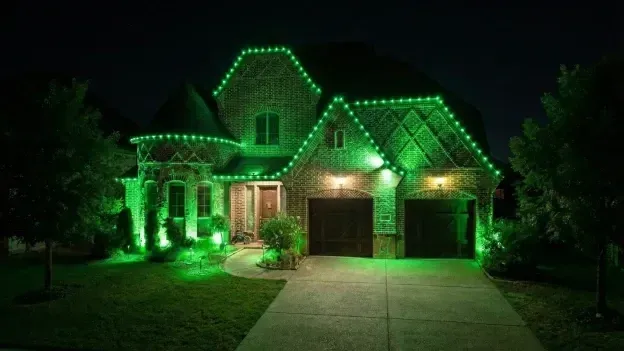
It’s hard to define, but I feel it when I see good work.
There’s restraint. Balance. Intentional darkness. Yes you read it right …Darkness.
Not everything needs to be lit. In fact, negative space makes the lit areas more stronger. That’s something I had to learn the hard way. Early on, I wanted to showcase everything. I thought more light meant more impact.
You know what now I know better from my own experience.
Modern outdoor decorative lighting isn’t about flooding a property with brightness. It’s about guiding the eye. Creating emotion. Making a home feel warm, secure, and quietly dramatic at night. There’s something powerful about pulling into a driveway and just pausing for a second. Not because it’s blindingly bright. But because it feels right.
Conclusion
When people ask me what really sets modern outdoor decorative lighting pros apart, I don’t jump straight to talking about technology, Or fixtures, Or smart controls.
Yes, those things matter. Of course they do. But that’s not the real difference.
It’s perspective.
We’re not just out there installing lights and packing up tools. We’re shaping what a home feels like after the sun goes down. We’re thinking about how someone experiences their space at night like how it looks from the street, from the kitchen window, from the end of the driveway after a long day.
And when it’s done right, it doesn’t scream for attention. It feels effortless. Natural. Like the house was always meant to look that way after sunset. Like nothing was added… even though a lot of thought went into it.