Managing Permanent Municipal Lighting Across a City
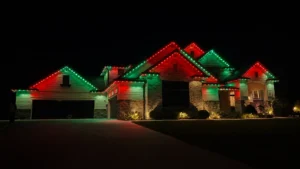
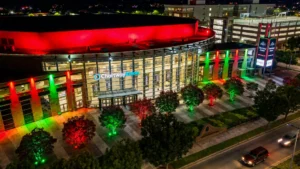
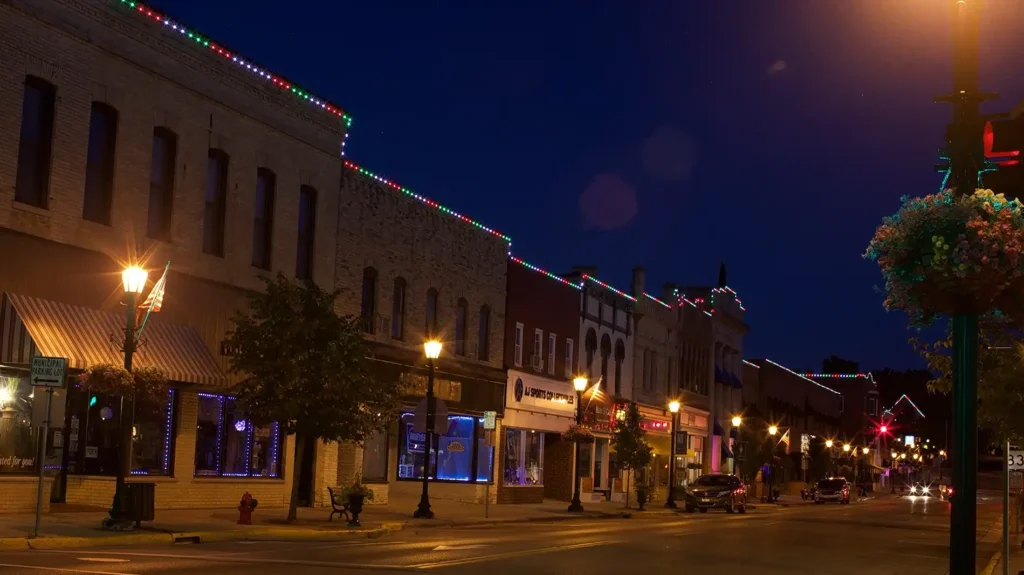
Municipalities can manage permanent outdoor lighting across public buildings, parks, plazas, downtown districts, landmarks, and other civic spaces through centralized controls, separate lighting zones, reusable scenes, automated schedules, and controlled user access. Instead of treating every property as an independent lighting installation, municipal teams can coordinate multiple locations while still allowing each public space to operate differently when needed.
BlueHopper combines app-based management with MeshTek networking, scenes, scheduling, grouping, and automation so permanent municipal lighting can be managed as a connected city-wide system rather than a collection of manually operated sites.
Can Municipalities Control Multiple Public Locations From One System?
Municipalities can manage lighting across multiple civic properties from a centralized control environment instead of configuring every location separately.
A city may have permanent lighting at City Hall, a downtown plaza, a park, a recreation center, and a landmark. Those locations can remain separate operational areas while still belonging to the same broader BlueHopper lighting network. This allows municipal teams to make property-level changes when one location needs something different and coordinate multiple locations when the city wants a common lighting appearance.
For larger deployments, BlueHopper’s MeshTek network is designed to support up to 5,000 connected devices and can extend across installations exceeding 10 million square feet.
How Do Lighting Zones Help Municipalities Manage Different Public Spaces?
Lighting zones allow a municipality to divide a large installation into manageable areas instead of controlling every fixture as one city-wide group.
A downtown district, for example, may contain roofline lighting, trees, a public plaza, civic buildings, and landscape areas. Each area can operate as its own zone, allowing the city to change one part without affecting the others. A park could remain on its normal white-light setting while a nearby civic building displays colors for an awareness campaign.
BlueHopper also supports virtual grouping, where selected lights can belong to more than one group. That gives municipal teams flexibility to create temporary combinations of fixtures without permanently reorganizing the underlying lighting zones.
How Can Municipalities Automate Lighting With Schedules?
Municipalities can use schedules to make recurring lighting changes happen automatically instead of requiring staff to operate each location manually.
BlueHopper supports dawn-dusk, daily, weekly, yearly, and calendar-based scheduling. A city can establish normal operating schedules for public spaces, prepare lighting for a dated civic event, or program a seasonal display in advance.
Schedules can also be applied to specific lighting zones. That means a public plaza, municipal building, park, or landscape area does not have to follow the same timetable as every other part of the network.
Once the schedule is established, the lighting can follow that routine without staff having to revisit each site every evening.
How Can Cities Coordinate Lighting for Civic Events and Holidays?
Cities can use reusable scenes to coordinate colors, effects, and lighting behavior across selected municipal locations for civic events, holidays, awareness campaigns, and community celebrations.
Instead of rebuilding the same display at every location, a scene can capture the intended lighting appearance and then be applied to the participating areas. Independence Day may involve several civic properties using the same red, white, and blue theme, while another scene could be created for a local festival, championship, or awareness campaign.
BlueHopper supports presets, effects, and one-click scenes, so the city can move between its normal nighttime lighting and a temporary civic display while keeping the underlying permanent installation unchanged.
How Can Different Municipal Departments Share Lighting Control?
Municipal lighting does not always need to be controlled by one person or one department. Different users can be given access according to the locations and responsibilities they manage.
Public works may oversee everyday schedules, while another authorized team may be responsible for civic events or downtown programming. BlueHopper supports multiple venues, user permissions, and controlled access, making it possible to separate operational responsibility without creating completely independent lighting systems.
This becomes more important as a municipal installation grows. Clear permissions help prevent every user from needing unrestricted control over every property while still allowing the appropriate teams to manage their own areas.
How Does the Network Support City-Scale Lighting Management?
A municipal control system has to continue working as the number of fixtures and locations increases. BlueHopper uses a self-healing BLE 5.0 mesh architecture designed for large connected lighting deployments.
The network supports up to 5,000 devices, with a stated node-to-node range of up to 500 meters in the municipal system. Because the mesh can route communication through connected devices, the system is designed to extend control across large civic properties, downtown areas, and multi-location installations rather than relying on one conventional short-range connection.
This network layer is what allows the controls above it—zones, scenes, schedules, and user access—to operate across larger municipal environments.
How Can Municipalities Manage Lighting Without Reconfiguring Every Site?
The main advantage of centralized municipal lighting management is that changes can be made through the control system instead of physically reconfiguring each public location.
A city can keep its normal lighting structure in place, change only selected zones, activate a civic scene across several properties, schedule that scene for a specific date, and then return each location to its normal routine afterward.
With BlueHopper, the permanent hardware remains installed while the operational layer changes digitally. That allows public buildings, parks, downtown districts, landmarks, and other municipal spaces to retain their own lighting needs while still functioning as parts of one coordinated city-wide lighting system.