Best Placement for Permanent Roofline Lights
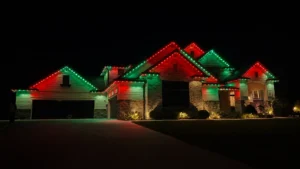
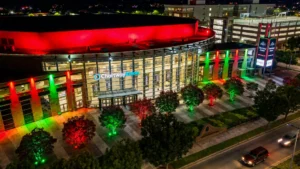
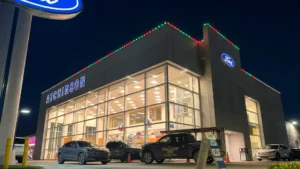
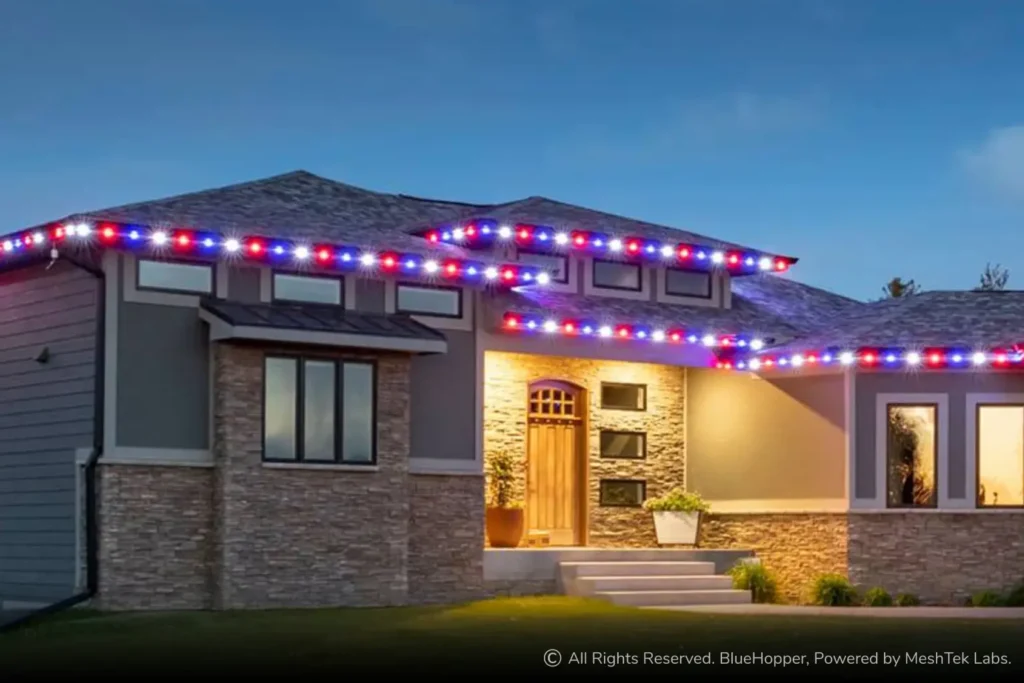
The best placement for permanent roofline lighting is along the architectural lines that most clearly define the home after dark, especially visible eaves, fascia, major peaks, gables, and connected garage rooflines. Front-facing placement works best when the roof outline, colors, and patterns need to remain clearly visible from the street, while under-soffit placement is better for illuminating entrances, porches, walls, and spaces beneath an overhang. Connected roof runs should maintain consistent alignment and spacing, while recessed soffits, entryways, curves, and unusual roof geometry may require a different fixture or mounting position to preserve a clean, continuous design.
Which Parts of the Roofline Should Be Lit?
Permanent roofline lighting should prioritize the roof sections that contribute most to the visible shape of the home rather than automatically covering every available edge. Main front eaves, prominent peaks and gables, garage rooflines, and other sections clearly visible from normal viewing positions usually provide the greatest architectural impact.
A large gable facing the street may contribute more to the finished appearance than several short returns hidden along the side of the property. Concentrating the lighting on dominant architectural lines creates a recognizable nighttime silhouette while preventing secondary roof sections from competing for attention.
The objective is architectural clarity: the illuminated roofline should make the form of the house easy to understand after dark.
Where Does Front-Facing Permanent Roofline Lighting Work Best?
Front-facing permanent roofline lighting works best along fascia, eaves, peaks, and gables where the illuminated edge needs to remain clearly visible from the street. Positioning the light toward the primary viewing area gives colors, patterns, animated scenes, and warm-white lighting a stronger visual presence than deeply recessed placement.
BlueHopper’s Spectra is designed specifically for front-facing roofline applications. It combines two RGB emitters with a dedicated 3000K warm-white channel, allowing the same prominent roofline to shift between saturated color displays and true warm-white architectural lighting.
This makes front-facing placement particularly useful where the roofline needs to serve both decorative occasions and everyday architectural lighting without changing the physical installation.
When Is Under-Soffit Permanent Roofline Lighting Better?
Under-soffit permanent roofline lighting is better when the goal is to illuminate an entrance, porch, wall, walkway, or other area beneath an overhang rather than primarily display the roof edge toward the street. The recessed position directs the lighting toward surfaces below and can create a softer architectural effect.
This makes soffit placement especially useful around covered entrances and recessed areas where people actually move beneath the roofline.
BlueHopper’s low-profile roofline system is designed to integrate closely with architectural surfaces, allowing under-soffit installations to remain discreet during daylight while providing useful illumination after dark.
Front-facing and under-soffit lighting can also work together. A prominent gable can establish the visible outline of the home while the porch beneath it receives downward illumination.
How Should Permanent Roofline Lights Follow Peaks and Gables?
Permanent roofline lights should follow prominent peaks and gables continuously when those features form an important part of the home’s visible architecture. Following the slope upward to the peak and back down preserves the actual roof geometry and creates a more complete nighttime silhouette.
Leaving a dominant gable dark while illuminating only the horizontal eaves can visually disconnect the upper architecture from the rest of the house.
Smaller roof transitions do not always need the same treatment. The deciding factor is whether the peak or gable materially contributes to the way the property is seen from important viewing positions.
The lighting should follow the architectural features that explain the shape of the house rather than mechanically tracing every change in direction.
Why Does Consistent Spacing Matter?
Consistent spacing helps permanent roofline lighting produce clean color bands, repeating patterns, chases, and animated effects across connected architectural runs. Irregular physical spacing can interrupt those effects even when individual LEDs are digitally controlled.
BlueHopper’s Ridge uses 35mm digitally addressable RGBW puck lights and is available in a 10-inch roofline-spacing configuration. A predictable physical rhythm allows colors and scenes to move more naturally across long sections of the architecture.
Spacing is only one part of consistency. Mounting height, setback, orientation, and alignment should also remain visually stable wherever the roof structure allows it.
A clean physical installation creates the foundation for clean digital effects.
Does Every Roofline Location Need the Same Fixture?
Different roofline locations can use different fixtures when the architecture or lighting purpose changes while still remaining part of one coordinated BlueHopper system.
Ridge is suited to continuous RGBW roofline runs where regular spacing and a defined puck-style appearance are appropriate.
Spectra is designed for front-facing positions where direct color visibility and dedicated warm-white output are important.
Apex provides architectural accent lighting for locations such as columns, deeply recessed soffits, and prominent entryways.
Matching the fixture to the architectural condition allows the lighting to remain visually coordinated without forcing one fixture format into every roof edge, recess, or accent location.
How Should Deeply Recessed Soffits Be Lit?
Deeply recessed soffits should generally be treated as a separate architectural layer rather than simply extending the main front-facing roofline deep beneath the overhang. A fixture mounted too far inside a recess may illuminate the area below but contribute little to the visible roof outline.
A stronger design separates the two functions. The visible exterior edge can continue the primary roofline while the deeper recess receives architectural accent or downward illumination.
BlueHopper’s Apex is designed for architectural areas such as deeply recessed soffits, columns, and entryways, allowing these spaces to receive their own lighting treatment while remaining part of the broader permanent system.
This adds depth to the architecture instead of flattening several surfaces into one continuous line of lights.
How Should Permanent Roofline Lighting Work Around the Main Entrance?
Permanent roofline lighting around a main entrance should preserve the architectural outline above while giving the doorway and surrounding features additional depth. The roof edge can remain part of the primary lighting line while soffit or accent lighting illuminates the porch ceiling, walls, columns, or recessed entrance below.
Entrances often combine several surfaces within a relatively small space. Treating every surface with the same fixture orientation can make those architectural layers disappear.
A clearer hierarchy lets the roofline define the house while the entrance becomes the focal point within it.
This approach is particularly useful for covered porches, columned entrances, and homes with deep entry recesses.
How Should Garage Roofline Lighting Connect With the House?
Garage roofline lighting should normally continue the visual rhythm of the main house when the garage forms part of the same street-facing elevation. Similar spacing, mounting position, fixture orientation, and alignment help the garage and residence read as one architectural composition after dark.
A garage with a prominent gable may deserve treatment similar to another major peak on the house. A simple horizontal garage eave may instead act as a supporting line beside the primary architecture.
The garage should strengthen the overall silhouette rather than appear to have an unrelated lighting installation.
How Should Permanent Lighting Follow Curved or Irregular Rooflines?
Permanent roofline lighting should follow curved, angled, and irregular architectural forms rather than forcing complex roof geometry into artificial straight lines. Changes in pitch, curved edges, angled fascia, and unusual transitions may require the lighting path to change direction while maintaining visual continuity.
Consistency does not mean every roof section needs identical geometry. It means the viewer should be able to follow the illuminated architecture naturally from one section to the next.
BlueHopper’s roofline system is designed to accommodate architectural edges and non-standard forms, allowing the lighting layout to respond to the property rather than requiring every installation to follow a simple straight run.
Should Every Roof Edge Have Permanent Lighting?
Every roof edge does not need permanent lighting. Selective coverage usually creates a clearer and more intentional architectural design than illuminating every available return, side section, and minor transition.
Major eaves, prominent gables, important peaks, garage frontage, and entrance architecture generally deserve more emphasis because they contribute most to the visible structure of the home.
Leaving less important roof sections subdued also creates contrast, helping the dominant architectural lines stand out more clearly.
The decision should therefore be based on the contribution each roof section makes to the overall architecture, not simply on the amount of linear footage available.
Is Fascia or Soffit Better for Permanent Roofline Lighting?
Fascia placement is generally better when the goal is to clearly display the roof outline, peaks, colors, and patterns, while soffit placement is better when the goal is to illuminate entrances, walls, porches, and spaces beneath an overhang.
The two placements solve different problems rather than competing for the same role.
Front-facing fascia lighting can establish the dominant architectural silhouette. Under-soffit lighting can then provide softer illumination in areas where people enter, walk, or gather.
Many homes therefore benefit from combining both positions instead of applying one mounting rule across the entire property.
How Should Daytime Appearance Affect Roofline Placement?
Permanent roofline lighting should follow existing fascia, soffit, trim, and architectural lines so the system remains visually integrated when the lights are off. Because the installation stays in place year-round, daytime appearance is part of the placement decision rather than an afterthought.
BlueHopper is designed around structural blending and an invisible-by-day appearance. Its architectural track organizes the fixtures and associated cabling into a clean permanent run rather than leaving temporary-looking strings and exposed components along the roofline.
Ridge aluminum track is available in multiple finishes, giving the installation additional flexibility to coordinate with different exterior surfaces.
A successful placement therefore performs in two opposite conditions: it clearly defines the architecture after dark while remaining restrained during daylight.
How Much of the Roofline Should Permanent Lights Cover?
Permanent roofline lights should cover the sections that are visually important or serve exterior areas with a clear lighting purpose rather than automatically extending around every side of the house.
The front elevation normally receives the greatest emphasis because it contains the architecture most frequently viewed from the street. Side rooflines become more valuable when they remain visible from major viewpoints, while rear rooflines can be useful when they overlook patios, pools, or outdoor-living areas.
Concealed sections with little visual or functional importance can remain unlit without weakening the overall design.
This keeps permanent lighting concentrated on the architecture that matters while allowing the system to extend naturally where another roof section has a clear role.
What Makes Permanent Roofline Placement Successful?
Permanent roofline placement works best when the lighting follows the home’s dominant architecture, stays consistently aligned across connected runs, and changes fixture orientation only when the surface or lighting purpose changes.
Front-facing fixtures should emphasize important eaves, peaks, and gables. Under-soffit lighting should illuminate spaces beneath overhangs. Architectural accent fixtures should resolve recessed entrances, columns, and other features that require a different treatment.
Consistent spacing keeps long roof runs visually clean, while selective coverage prevents minor roof edges from competing with the architectural features that define the home.
When those decisions work together, the result is a clean, structurally integrated permanent roofline that remains discreet during the day and transforms the property after dark.