Where to Install Permanent Outdoor Lights?
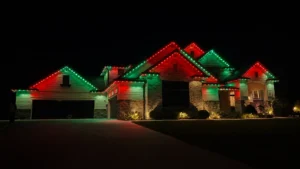
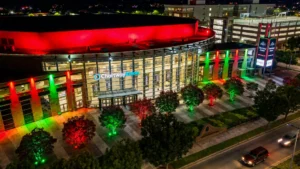
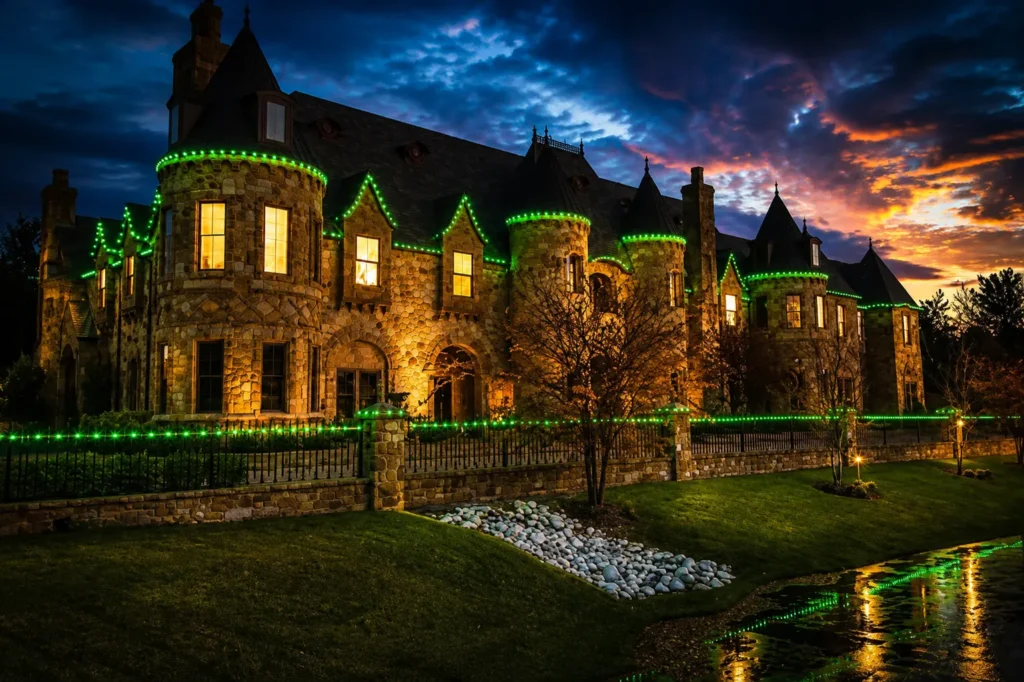
Permanent outdoor lights should be installed first along the home’s primary architectural lines—especially rooflines, eaves, and soffits—and then extended to entrances, façades, pathways, landscape areas, trees, patios, pergolas, pool cages, fences, and other exterior spaces that benefit from permanent illumination. A strong layout is layered rather than excessive: roofline lighting defines the structure, façade and landscape lighting add depth, pathways and entrances provide useful illumination, and outdoor-living or perimeter areas can operate as separate lighting zones.
Start With the Main Roofline and Eaves
For most homes, the primary roofline is the natural starting point for permanent outdoor lighting because it establishes the overall shape of the property after dark.
Permanent lights can follow straight eaves, fascia boards, peaks, gables, and other prominent architectural edges. This creates a continuous visual outline instead of isolated points of light and gives the rest of the exterior lighting plan a clear architectural foundation.
Low-profile permanent lighting track can remain integrated with the structure throughout the year rather than being installed and removed seasonally. BlueHopper Track-Lite uses UV-rated acrylic with a fire-retardant base and is available in brown, gray, white, and beige, allowing the track to blend with different exterior finishes.
Its flexible profile can also follow straight, curved, and irregular architectural surfaces, making permanent lighting suitable for more than simple rectangular rooflines.
Use Soffits for Lighting Beneath Overhangs
Soffit placement serves a different purpose from lighting the outer edge of the roof.
Lights positioned along a fascia or eave primarily emphasize the silhouette of the house. Permanent lighting beneath a soffit can direct illumination toward entrances, porches, covered walkways, walls, and the area immediately below the overhang.
This makes soffits particularly useful where the goal is both architectural definition and functional illumination.
A home does not have to use the same placement method everywhere. Front-facing roofline lighting can define peaks and eaves while under-soffit lighting serves entrances or covered areas.
Give Entrances and Key Architectural Features More Emphasis
Once the primary roofline has been established, permanent lighting should focus on the features that visually identify the home.
These may include front entrances, porch structures, columns, recessed areas, garage frontage, prominent peaks, and other architectural details.
A strong design does not give every exterior feature equal emphasis. The primary entrance and most distinctive architectural elements should usually receive more attention, while secondary features support the overall composition.
This creates a visual hierarchy:
roofline → entrance → architectural details → surrounding property
rather than treating the entire exterior as one uniformly illuminated surface.
Add Façade and Wall Lighting for Depth
Roofline lighting primarily defines the outline of a house. Façade lighting reveals the surfaces and details inside that outline.
Brick, stone, stucco, siding, walls, columns, and other exterior surfaces can be highlighted to add texture and depth after dark.
This creates a layered lighting effect:
roofline lighting defines the structure
façade lighting reveals architectural detail
landscape lighting extends the scene into the property
Used together, these layers can create a much more complete nighttime appearance than simply tracing the roof.
Extend Permanent Lighting Into Pathways and Landscape Areas
Permanent outdoor lighting does not have to end at the walls of the house.
Pathways, walkways, garden beds, planting areas, and approaches to entrances are natural areas to consider once the primary architecture has been established.
Landscape lighting connects the illuminated house with the surrounding property and creates useful layers of light at ground level.
Different fixture types can serve different purposes. Pathway fixtures can define walking routes, wall washers can illuminate broad exterior surfaces, floodlights can cover larger areas, and directional landscape fixtures can highlight plants, trees, or architectural features.
This allows a permanent lighting design to develop from:
roofline → façade → pathway → landscape
instead of concentrating all illumination at roof height.
Use Selected Trees and Garden Features as Focal Points
Trees and landscape features can add height and depth to the lighting plan, but every tree does not need to be illuminated.
A stronger approach is often to identify prominent trees, specimen plantings, canopy areas, or garden features that contribute to the overall nighttime view.
Selected tree lighting can create visual depth beyond the house, while lower-level landscape lighting connects those focal points back to pathways and architectural areas.
The objective is to create layers rather than uniform brightness across the entire yard.
Include Patios and Outdoor Living Areas
Patios, covered seating areas, outdoor kitchens, and other frequently used exterior spaces should be considered when the property is regularly used after sunset.
These areas usually require a different lighting environment from the front roofline.
A front elevation may use brighter architectural lighting, while a patio may use warmer white light, lower brightness, or a separate scene for dining and relaxing.
Permanent lighting allows outdoor-living areas to remain part of the same overall property system while operating independently when needed.
Add Permanent Lighting to Pergolas and Outdoor Structures
Pergolas, gazebos, covered patios, and similar structures have architectural lines that permanent lighting can naturally follow.
Lighting can run along beams and structural edges to create overhead or perimeter illumination without relying on temporary string lights.
Flexible permanent track is especially useful around structures with curves, changing angles, or non-standard geometry because the lighting can follow the architecture instead of forcing the structure to fit a rigid lighting layout.
Pergolas and outdoor structures can therefore function as their own lighting zones while remaining coordinated with the house.
Treat Pool Cages and Screen Enclosures as Their Own Lighting Area
Homes with pool cages or screened enclosures have another distinct application for permanent lighting.
Lighting can follow structural frames and enclosure lines so the pool area becomes part of the permanent exterior-lighting plan instead of depending on temporary lighting for evening use.
The pool area can also operate separately from the front of the house.
For example, homeowners may use a softer setting around the pool on ordinary evenings, brighter lighting for activities, and different colors or scenes when entertaining.
Extend Lighting to Fences, Gates, and Property Borders
Permanent lighting can extend beyond the house itself to fences, perimeter walls, gate frames, rails, and other property boundaries.
This can be particularly effective on larger lots where the backyard or perimeter would otherwise disappear after dark.
Fence lighting can visually connect distant areas of the property with the house while also functioning as an independent lighting zone.
A homeowner could therefore keep subtle perimeter lighting active in the evening while leaving decorative roofline lighting off, or coordinate the entire property for a holiday or event.
Plan the Property as Separate Lighting Zones
Permanent-lighting placement should consider not only where fixtures will be installed, but also which areas should operate independently.
A residential property might be divided into zones such as:
- front roofline
- garage and entrance
- landscape and pathways
- backyard
- patio or pergola
- pool cage
- fence or perimeter
These areas can then use different colors, brightness levels, scenes, and schedules or operate together when a coordinated whole-property look is wanted.
BlueHopper supports 16 million+ colors, 100+ scenes and effects, brightness control, scheduling, voice control, and lighting zones, giving homeowners flexibility after the physical installation is complete.
Placement therefore affects more than appearance. It also determines how effectively different areas of the property can be controlled.
Consider Daytime Appearance When Choosing Placement
Permanent lights remain installed throughout the year, so the system should look intentional even when it is turned off.
Track and wiring should follow existing architectural lines wherever possible rather than appearing as separate seasonal equipment attached to the house.
BlueHopper’s low-profile track houses the lights and associated cabling, while multiple track colors help the installation blend with fascia, soffits, beams, fences, and other surfaces.
Daytime integration is especially important along highly visible front rooflines and entrances.
Should Permanent Outdoor Lighting Cover the Entire House?
Not necessarily. The strongest permanent-lighting layout is selective rather than excessive.
Some houses may achieve the desired result with the front roofline, entrance, and selected landscape areas. Larger properties may benefit from extending the system into patios, pergolas, pathways, trees, pool enclosures, fences, and backyard structures.
A practical order for planning a property is:
1. Main roofline and architectural outline
2. Entrance and prominent façade features
3. Pathways and frequently used exterior areas
4. Landscape and selected trees
5. Patio, pergola, pool, and outdoor-living areas
6. Fence, perimeter, and secondary spaces
This approach establishes the most important architectural structure first and adds lighting only where it improves the way the property looks or functions.
Can Roofline, Landscape, Fence, and Patio Lighting Work Together?
Yes. Permanent outdoor lighting can extend beyond a single roofline into a coordinated whole-property system.
Roofline, landscape, fence, pool-cage, patio, and other exterior lighting areas can remain separate zones while being controlled from the same platform.
For example, a homeowner could use warm white on the roofline and entrance, softer landscape lighting around pathways, and separate backyard lighting around the patio or fence. The same areas can then be grouped into one coordinated scene for Christmas, another holiday, a party, or a special event.
This makes it possible to start with one part of the property and expand later without treating every new lighting area as an unrelated system.
What Is the Best Starting Point for Permanent Outdoor Lighting?
For most homes, start with the most visible roofline and the primary architectural features, then expand into the exterior spaces that are used most frequently.
A street-facing property may place greater emphasis on the roofline, entrance, façade, and front landscaping. A home centered around backyard living may prioritize patios, pergolas, pool cages, fences, trees, and landscape areas after establishing the main architectural lighting.
The strongest permanent outdoor-lighting plan is not the one with the greatest number of lights. It is the one that defines the architecture, provides useful illumination where people need it, creates depth across the property, and allows the important exterior areas to work together as one coordinated lighting system.