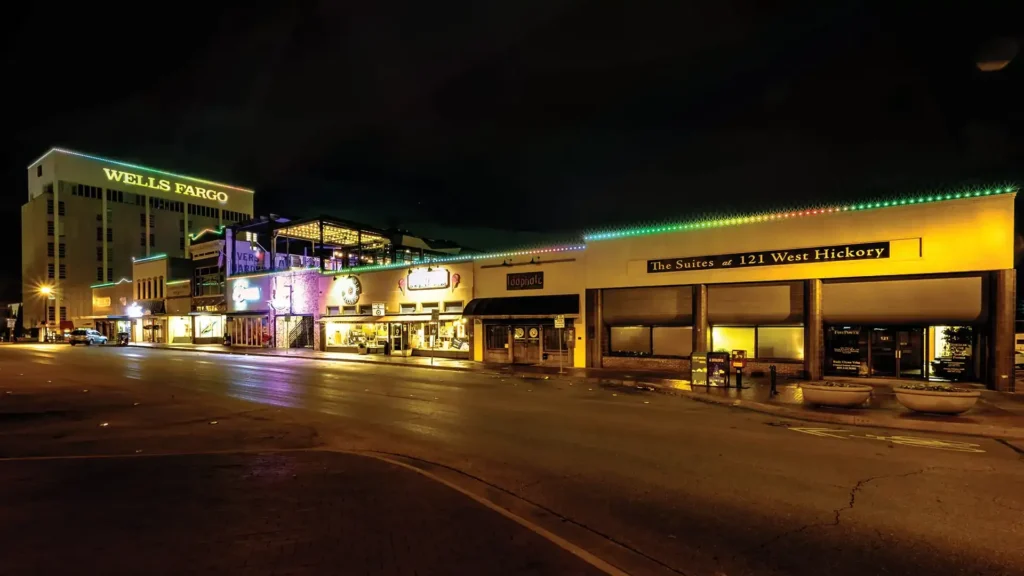
Cooperative Purchasing for Permanent Municipal Lighting
Cooperative purchasing allows eligible municipalities to purchase permanent outdoor lighting through an existing competitively awarded contract established by a public purchasing cooperative, subject to applicable procurement laws and local approval requirements. Instead of developing a separate solicitation for every qualifying purchase, a city may use the cooperative contract’s available terms and pricing. At BlueHopper, we offer eligible public agencies a purchasing pathway through The Interlocal Purchasing System (TIPS), helping municipal teams evaluate permanent architectural, roofline, and landscape lighting while using an established procurement framework.
Understand How a Cooperative Purchasing Contract Is Established
A cooperative purchasing contract is generally established when an authorized public purchasing organization conducts a competitive solicitation, evaluates participating vendors, and awards contracts for specified products or services. Eligible public entities may then be permitted to purchase through those contracts under the applicable cooperative rules. The contract establishes a purchasing framework, but individual municipal projects still require appropriate funding and authorization. Our TIPS purchasing option gives qualifying agencies a route to explore BlueHopper lighting through an existing cooperative arrangement.
Determine Whether Your Municipality Can Use Cooperative Purchasing
A municipality can use cooperative purchasing when its applicable laws, internal procurement policies, and the selected contract allow the proposed purchase. Eligibility may depend on the public entity’s location, membership status, purchasing authority, project value, funding source, and contract coverage. Your procurement department should confirm these conditions before relying on a cooperative contract. We can help your team identify the relevant BlueHopper purchasing information while your agency determines whether the arrangement is authorized for its particular project.
Identify the Products and Services Covered by the Contract
Cooperative purchasing can only be used for the products and services covered by the applicable awarded contract and permitted under the municipality’s purchasing rules. A municipal lighting project may involve LED fixtures, controllers, power supplies, mounting equipment, professional installation, and electrical work, but those elements should not automatically be assumed to fall under one contract. We can help clarify the BlueHopper equipment proposed for your installation, allowing your purchasing team to review whether the selected contract covers the complete scope or requires separate arrangements.
Use Existing Contract Terms to Support Purchasing Review
An existing cooperative contract can provide a defined framework of vendor terms, pricing arrangements, and purchasing conditions for eligible public buyers. This may reduce the amount of contract development required compared with starting an entirely new procurement, although municipalities must still perform their own reviews. Your purchasing team should examine the current agreement, applicable amendments, authorized product categories, and order requirements. We can help explain how the proposed BlueHopper lighting equipment fits within the available purchasing arrangements.
Understand How Cooperative Pricing Applies to Your Project
Cooperative pricing provides a contract-based purchasing structure, but the final cost of a municipal lighting installation still depends on the actual equipment quantities, site conditions, electrical requirements, and installation services. A downtown district with multiple buildings may require additional control equipment and labor compared with a single civic facility. We can prepare a project-specific BlueHopper quotation for the proposed installation while your procurement team verifies that the pricing and related services comply with the applicable cooperative contract.
Compare Cooperative Purchasing With a Separate Municipal RFP
Cooperative purchasing and a separate municipal request for proposals are different procurement approaches that may both be available under local rules. A new RFP allows the city to solicit and evaluate proposals specifically for its project, while an eligible cooperative purchase may use a previously awarded contract. The appropriate choice depends on the city’s purchasing authority, project requirements, contract availability, and evaluation priorities. We can support your municipality with relevant lighting specifications and project information regardless of the authorized purchasing route.
Confirm Whether a Separate Solicitation Is Required
A municipality may be able to purchase through a cooperative contract without issuing a new project-specific competitive solicitation when the cooperative agreement and applicable laws authorize that approach. However, cooperative purchasing does not automatically eliminate all bidding, documentation, public approval, or local competition requirements. Your procurement department should confirm whether additional quotations, board approvals, or other procedures apply. We can help supply the BlueHopper project information needed for those reviews without making the legal determination on the city’s behalf.
Coordinate Procurement With the City’s Budget Approval
Cooperative purchasing can support an approved municipal lighting project, but it does not provide the money needed to purchase the equipment. Your city must still identify an authorized funding source, establish any required capital or operating appropriation, and obtain the necessary spending approvals. A cooperative contract determines a possible purchasing route, while the municipal budget determines whether the project can proceed. We can provide a defined BlueHopper lighting scope and quotation to support your team’s financial review.
Plan Installation Services Alongside Equipment Purchasing
Cooperative procurement for municipal lighting should clarify whether the selected agreement covers only equipment or also includes professional installation, electrical work, system configuration, and commissioning. A lighting system may require different services depending on building height, available power, public access, and the number of participating locations. BlueHopper works with an installer network, and we can help discuss the installation requirements of your project. Your purchasing team should verify the contractual arrangements for each included service before issuing an order.
Keep Multiple Municipal Departments Aligned
A cooperative lighting purchase may involve procurement, finance, public works, facilities, information technology, and economic development departments, each responsible for different parts of the project. Procurement verifies the purchasing method, finance confirms the funds, facilities reviews the installation, and IT may assess connected control features. We can help explain the relevant BlueHopper equipment and MeshTek control capabilities so your team can review the proposed system across departments without losing sight of the overall project objectives.
Review Smart Lighting Requirements Within the Purchase
Municipalities should review smart lighting requirements before purchasing through a cooperative contract because programmable controls can be an important part of the proposed equipment. Your city may require separate lighting zones, scheduled scenes, authorized user access, and coordination between multiple public properties. BlueHopper’s MeshTek-powered platform supports compatible architectural and landscape lighting with programmable colors, groups, scenes, and schedules. We can help identify the proposed configuration while your team confirms that it meets the project’s technical and procurement requirements.
Verify Vendor and Contract Information Before Ordering
A municipality should verify the current awarded vendor, contract identifier, effective dates, product coverage, pricing rules, and purchasing instructions before placing a cooperative order. These details can change as agreements expire, renew, or receive amendments. Your procurement team should rely on current official contract records rather than assumptions based on earlier purchases or general marketing information. We can coordinate the relevant BlueHopper proposal details while your purchasing department confirms the contract information required for its records.
Follow the Required Purchase Order Process
An eligible cooperative purchase generally proceeds through the ordering and approval process specified by the applicable agreement and the municipality’s internal purchasing rules. The city may need to prepare an approved purchase order, reference the cooperative contract, confirm pricing, and submit documentation through the required channel. Your procurement department should verify the current instructions for its chosen contract. We can help ensure the proposed BlueHopper equipment and installation scope are clearly identified in the quotation used for the order.
Define Responsibility for Delivery and Installation
Cooperative purchasing documentation should distinguish equipment delivery obligations from installation, electrical work, scheduling, and project acceptance responsibilities. This is especially important when a municipal project involves several buildings or locations with different access conditions. Your team should confirm who supplies the products, who installs them, and who addresses any issues identified during commissioning. We can help clarify the proposed BlueHopper equipment and service arrangements so those responsibilities can be included in the final purchasing documents.
Review Warranty and Support Terms Within the Agreement
Municipalities should review the product warranty, installation workmanship coverage, service procedures, and other applicable support terms associated with the proposed cooperative purchase. The existence of an awarded purchasing contract does not mean every lighting component has identical warranty protection or that all maintenance expenses are included. Your facilities and procurement teams should examine the relevant documents before approval. We can help identify BlueHopper product information and the installation arrangements that require specific contract clarification.
Consider Cooperative Purchasing for Multi-Location Projects
Cooperative purchasing may be useful for eligible municipalities planning permanent lighting across several public buildings, parks, downtown streets, or civic landmarks when the contract covers the required products and services. A coordinated project can benefit from common equipment specifications and a defined purchasing framework, while each location still needs appropriate installation planning. BlueHopper’s compatible MeshTek-powered lighting systems support grouped scenes and independent zones, allowing us to help evaluate multi-location requirements within a project-specific proposal.
Maintain Complete Cooperative Purchasing Records
Municipalities should retain the cooperative contract reference, eligibility review, approved quotation, purchasing authorization, order records, and relevant vendor documentation. These records help demonstrate how the purchase was approved and support future maintenance, audits, and contract administration. Your agency may also need to document why the cooperative purchasing method was permitted under its rules. We can help provide the BlueHopper equipment and quotation information required for the city’s project file.
Frequently Asked Questions
Can municipalities buy permanent outdoor lighting without issuing a new RFP?
Yes, in some circumstances. Eligible municipalities may use an authorized cooperative purchasing contract without conducting a separate project-specific solicitation when applicable laws, contract terms, and local policies permit that approach.
Is cooperative purchasing available to municipalities outside Texas?
Potentially. Cooperative purchasing availability depends on the participating public entity, the contract, and the applicable laws of its jurisdiction. Your procurement department should confirm eligibility before proceeding.
Does cooperative purchasing include installation costs?
Installation may be included when the applicable contract covers those services, but coverage should not be assumed. Your city should verify whether equipment, electrical work, professional installation, and commissioning are included in the proposed purchase.
Can our municipality use TIPS to purchase BlueHopper lighting?
We offer eligible public agencies a pathway through TIPS for permanent municipal lighting. Your procurement team should verify current contract details, covered products and services, and local purchasing requirements before using the arrangement.
Explore a Purchasing Route That Fits Your Municipality
Your procurement team may already have an established cooperative purchasing process for public equipment and infrastructure. If permanent outdoor lighting is part of your next municipal improvement project, it is worth determining whether an eligible contract can support the purchase.
We can help your team review BlueHopper’s municipal lighting options within the available cooperative purchasing framework.
Start with your agency’s procurement requirements and the purchasing approach you are considering. We can discuss relevant equipment, contract-based purchasing information, and the next steps for developing a project-specific proposal.
Discuss Cooperative Purchasing for Your Municipal Lighting Project